10+
Satellite Sensors
15+
GIS Projects
9 cm
Finest Drone GSD
40 yr
Longest Time-Series
3+
Countries Studied

GIS & Remote Sensing Tools

A modern geospatial workflow spans desktop GIS software, cloud-computing platforms, and scriptable Python libraries. Below are the core tools I use from image preprocessing to final map production.

Desktop GIS & Image Analysis

  • ArcGIS Pro / ArcMap — spatial analysis, geoprocessing, cartographic output, ModelBuilder workflows
  • QGIS — raster/vector analysis, Semi-Automatic Classification Plugin (SCP), SAGA integration
  • ENVI — hyperspectral image analysis, spectral library matching, QUAC/FLAASH atmospheric correction
  • SNAP — Sentinel-1 SAR processing, Sentinel-2/3 radiometric correction, coherence analysis
  • ERDAS Imagine — batch image processing, large mosaic production, photogrammetric workflows
ArcGIS ProQGISENVISNAP

Cloud Geospatial Platforms

  • Google Earth Engine (GEE) — planetary-scale image analysis, time-series, LULC classification; JavaScript & Python API (geemap)
  • Microsoft Planetary Computer — STAC-based access to Landsat, Sentinel, MODIS, NAIP archives via Python
  • NASA Earthdata / earthaccess — MODIS, VIIRS, ICESat-2, PACE ocean color data access
  • Copernicus Data Space Ecosystem — on-demand Sentinel processing, SentinelHub EO Browser
  • AWS SageMaker Geospatial — cloud ML pipelines on raster datasets at scale
GEEPlanetary ComputerSTACearthaccess

Python Geospatial Stack

  • GeoPandas & Shapely — vector I/O, spatial joins, overlay, topology analysis
  • Rasterio & GDAL — raster read/write, reprojection, band math, tiling
  • xarray & rioxarray — N-D labeled arrays for satellite time-series, lazy loading
  • geemap & leafmap — GEE Python API, interactive web map visualization
  • stackstac / odc-stac — lazy loading of STAC collections into xarray datacubes
  • Folium, ipyleaflet — interactive slippy maps in notebooks
  • pyproj, Fiona — CRS management, format conversion (GeoJSON, Shapefile, GeoPackage)
GeoPandasRasterioxarraygeemapstackstac

UAV & Drone Remote Sensing

  • Agisoft Metashape — Structure-from-Motion (SfM) photogrammetry, dense point cloud & DSM generation
  • DJI Phantom / Mavic — high-resolution coastal surveys down to 9 cm GSD
  • OpenDroneMap (ODM) — open-source drone imagery processing, orthomosaic production
  • Pix4D — precision agriculture & terrain model workflows
  • Applications: coastal vegetation mapping, Rohingya camp monitoring (Cox's Bazar, Bangladesh)
SfMMetashapeODM9 cm GSD

Satellite Sensors & Data Sources

Multi-sensor approaches overcome inherent trade-offs between spatial resolution, temporal frequency, and spectral coverage. I combine the following platforms for synoptic and long-term coastal monitoring.

Optical
Multispectral

Landsat Program (1–9) — NASA / USGS

The backbone of land change science with a 50-year archive at 30 m resolution. I use Landsat 5 TM, 7 ETM+, 8 OLI, and 9 OLI-2 for long-term coastal change detection, multi-decadal vegetation indices (NDVI, EVI, NDWI, MNDWI), and surface water dynamics. Collection 2 Level-2 SR products processed via GEE and Python. Key applications: Cox's Bazar shoreline (1984–2025), Mississippi Sound water quality.

30 m16-day revisit1972–present8 bands (OLI)
Optical
High Res

Sentinel-2 MSI — ESA Copernicus

13-band multispectral sensor (VNIR + SWIR) with 10 m resolution in key bands. Used for vegetation mapping, mangrove delineation, LULC classification, and coastal water quality. Red-edge bands (B5, B6, B7) enable fine-scale habitat discrimination. Free access via GEE and Microsoft Planetary Computer.

10–60 m5-day revisit13 bandsRed-Edge
SAR
Radar

Sentinel-1 SAR — ESA Copernicus

C-band SAR enables all-weather, day/night monitoring — critical in cloud-prone tropical Bangladesh. Key uses: flood inundation mapping (VV/VH dual-polarization change detection), mangrove canopy structure from backscatter, shoreline delineation, and cyclone damage assessment. Processed in SNAP: GRD → sigma0 → terrain-corrected.

C-band SAR10 mFlood MappingAll-Weather
Ocean
Color

MODIS (Terra/Aqua) & VIIRS — NASA

Daily near-global coverage for ocean color, SST, Chl-a, turbidity (Kd490), and POC. I use Level-2 and Level-3 MODIS ocean products (OC3, Rrs) for synoptic coastal water quality monitoring and time-series analysis of the Mississippi Sound and Gulf Coast.

Ocean Color250–1000 mDailyChl-a / SST
Elevation
DEM

SRTM, ALOS DEM, LiDAR & ICESat-2

DEMs are essential for flood modeling, watershed delineation, and terrain analysis. I use SRTM (30 m), ALOS World 3D (12.5 m), CoastalDEM (1 m), and NOAA Digital Coast high-resolution LiDAR for inundation risk, sea-level rise exposure, and coastal morphological change. ICESat-2 ATL08 provides forest canopy height.

SRTM 30 mLiDAR 1 mCoastalDEMICESat-2
Next-Gen
Hyperspectral

NASA PACE, EMIT & EnMAP

NASA PACE OCI provides global ocean color at 5 nm spectral resolution — enabling phytoplankton functional type (PFT) classification that directly supports my FlowCytobot plankton imaging work. EMIT measures surface mineralogy from the ISS. EnMAP (DLR) delivers 242-band VNIR-SWIR hyperspectral data for vegetation, soil, and water analysis.

PACE / OCIEMITEnMAPHyperspectral

Key Application Domains

My geospatial research spans six primary coastal and oceanographic application domains, each combining multi-source satellite data with machine learning and field validation.

Land Use / Land Cover Change

  • Multi-temporal classification using Landsat & Sentinel-2 time-stacks
  • Supervised classifiers: Maximum Likelihood, SVM, Random Forest, CNN (VGG-19, U-Net)
  • Change detection: post-classification comparison, LandTrendr, CCDC, BFAST
  • Accuracy: κ (kappa), OA, per-class F1 score, confusion matrix
  • Rohingya camp: 9 cm drone, 9-class classification, >Tk 1,800 cr forest loss quantified
LandTrendrCCDCκ Accuracy

Mangrove & Coastal Vegetation

  • Mangrove extent from Sentinel-1 SAR + Sentinel-2 optical data fusion
  • Vegetation indices: NDVI, EVI, SAVI, NDWI, tasseled-cap greenness & wetness
  • Phenology from MODIS 8-day & Landsat annual composites
  • Sundarbans: cyclone impact (Sidr, Aila, Amphan) & recovery trajectories
  • Above-ground biomass from SAR backscatter + ICESat-2 canopy height
NDVI / EVISAR FusionSundarbansBiomass

Shoreline Change & Coastal Erosion

  • Automated shoreline extraction via MNDWI / NDWI thresholding
  • DSAS — NSM, End Point Rate (EPR), Linear Regression Rate (LRR), Weighted LRR
  • 40-year record: Cox's Bazar coast (1984–2025)
  • SLR vulnerability: tidal flat mapping & inundation scenario modeling
  • Estuarine planform change and tidal channel migration analysis
DSASMNDWIEPR / LRRErosion

Coastal Water Quality RS

  • Chl-a, turbidity, TSS, CDOM retrieval from multispectral imagery
  • Ocean color algorithms: OC3, OCI, QAA, Rrs band ratios
  • MODIS, Sentinel-3 OLCI for synoptic water clarity products
  • Mississippi Sound: HAB detection, hypoxia mapping, oyster water quality
  • ML regression (RF, XGBoost, LSTM) on satellite–in situ matchups
OC3 / OCIChl-aHAB DetectionOLCI

Flood Inundation & Disaster Mapping

  • SAR flood mapping via Sentinel-1 VV/VH change detection (pre/post event)
  • HAND model (Height Above Nearest Drainage) for flood extent
  • FEMA flood zone integration for risk overlay analysis
  • Bangladesh delta: cyclone-induced tidal surge mapping (Sidr / Aila)
  • Seasonal inundation frequency & floodplain connectivity maps
Sentinel-1 SARHANDFlood RiskFEMA

Bathymetry & Benthic Mapping

  • Shallow-water bathymetry (SDB) from Sentinel-2: Stumpf log-ratio & Lyzenga band-ratio
  • Benthic habitat: coral, seagrass, sand, rubble — spectral unmixing
  • Intertidal zone from tidal-composite Landsat stacks
  • Integration with NOAA hydrographic surveys & GEBCO 2023
  • Seagrass distribution & health in the Mississippi Sound
SDBBenthic HabitatIntertidalSeagrass

Google Earth Engine Workflows

GEE enables planetary-scale geospatial analysis entirely in the cloud, eliminating the need to download petabytes of imagery. I use both the JavaScript Code Editor and the Python API (geemap) for research and teaching at Mississippi State University.

Image
Preprocessing

Cloud Masking & Radiometric Correction

Automated cloud and cloud-shadow masking using QA_PIXEL bands (Landsat CFmask) and SCL layer (Sentinel-2). Seasonal median and percentile compositing generates cloud-free mosaics for monsoon-affected regions. Direct use of Collection 2 SR/ST products ensures cross-sensor consistency for long time-series.

CFmaskMedian CompositeSR / ST L2
Time
Series

Spectral Index Time-Series & Change Detection

Computing NDVI, MNDWI, EVI, BSI, NBR, and custom water quality indices over 1984–2025. Seasonal phenology charting and abrupt change detection using LandTrendr and CCDC algorithms. Trend analysis with Mann–Kendall and Sen's slope applied in Python post-export.

Landsat time series Mississippi Sound

Landsat time-series — water quality dynamics, Mississippi Sound (GEE)

LandTrendrCCDCMann–Kendall
LULC
in GEE

Large-Area Classification

Training Random Forest, SVM, and CART classifiers in GEE using stratified reference samples from high-resolution imagery. Applied for Bangladesh coast and US Gulf Coast LULC mapping. Outputs exported to GeoTIFF for analysis in Python/QGIS.

RF in GEESVMOOB Error
Water
Quality

GEE → xarray → ML Pipeline

End-to-end workflow: extract multi-year Landsat / Sentinel-2 stacks from GEE → export to xarray → ML-based water quality parameter retrieval for the Mississippi Sound. See my dedicated tutorials:

GEE
Apps

Interactive Dashboards & Stakeholder Tools

Interactive GEE App dashboards for real-time coastal water quality indices, mangrove extent, and LULC classification. UI panels let users select date ranges, band combinations, and thresholds — supporting non-technical stakeholders in coastal management and conservation planning.

GEE AppsUI PanelsStakeholder Tools

Key Spectral Indices

Spectral indices transform raw reflectance into ecologically meaningful proxies. I routinely compute the following across Landsat, Sentinel-2, and MODIS imagery.

IndexFormulaApplicationBest Sensor
NDVI(NIR − Red) / (NIR + Red)Vegetation health, biomass, phenologyLandsat, Sentinel-2, MODIS
EVI2.5 × (NIR − Red) / (NIR + 6·Red − 7.5·Blue + 1)Dense canopy structureMODIS, Landsat 8/9
NDWI(Green − NIR) / (Green + NIR)Surface water, open water bodiesLandsat, Sentinel-2
MNDWI(Green − SWIR) / (Green + SWIR)Shoreline extraction, coastal waterLandsat, Sentinel-2
BSI(SWIR + Red − NIR − Blue) / (SWIR + Red + NIR + Blue)Bare soil, deforestationLandsat, Sentinel-2
SAVI(NIR − Red) / (NIR + Red + L) × (1+L)Sparse vegetation, coastal marginsLandsat, Sentinel-2
NDMI(NIR − SWIR) / (NIR + SWIR)Vegetation moisture, mangrovesLandsat 8/9, Sentinel-2
NBR(NIR − SWIR2) / (NIR + SWIR2)Burn severity, post-fire recoveryLandsat 8/9, Sentinel-2
OC3 / Chl-aCubic poly on log(Rrs443/Rrs555)Ocean chlorophyll-a, HAB monitoringMODIS, OLCI, PACE
FAINIR − (Red + (SWIR − Red) × Δλ)Floating algae, Sargassum, cyanobacteriaMODIS, Sentinel-2
TurbidityRed / Green or log-transformTurbidity, TSS in estuarine waterLandsat, Sentinel-2

Key Research Projects

2024–2027

Coastal Water Quality — Mississippi Sound (NSF/GRI)

Graduate Research Assistantship. Integrating Landsat-8/9, Sentinel-2, MODIS ocean color, and in-situ sensors for long-term analysis of turbidity, Chl-a, CDOM, and DO in the Mississippi Sound. ML models trained on satellite–in situ matchups inform oyster aquaculture siting and coastal eutrophication management.

Landsat 8/9Sentinel-2Water QualityML Retrieval
2022–2023

Floodplain Connectivity & Wetland Mapping — USGS

Multi-temporal Landsat & Sentinel-1 SAR analysis to map floodplain inundation, delineate wetland boundaries, and quantify seasonal hydrological connectivity. Integrated with HEC-RAS and HAND model outputs. Contributed to USGS regional wetland monitoring program.

SARHANDFloodplainUSGS
2019–2021

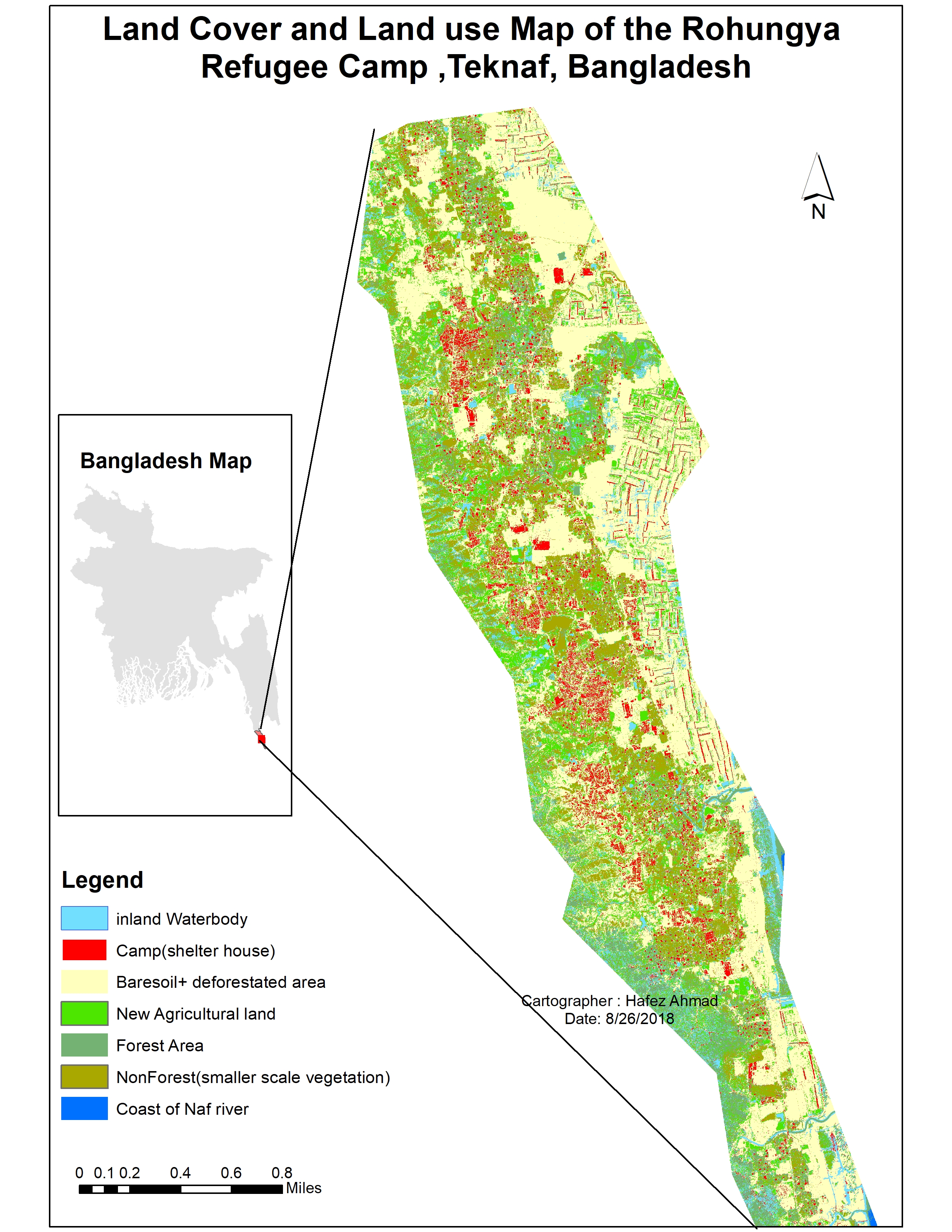
Rohingya Camp LULC & Deforestation — Cox's Bazar

Mapped land use change in Teknaf & Ukhia driven by ~919,000 Rohingya refugees (2017+). Combined 9 cm GSD drone imagery with Sentinel-2 to classify 9 land cover classes. Bangladesh Forest Dept. estimated >Tk 1,800 crore in forest resources lost.

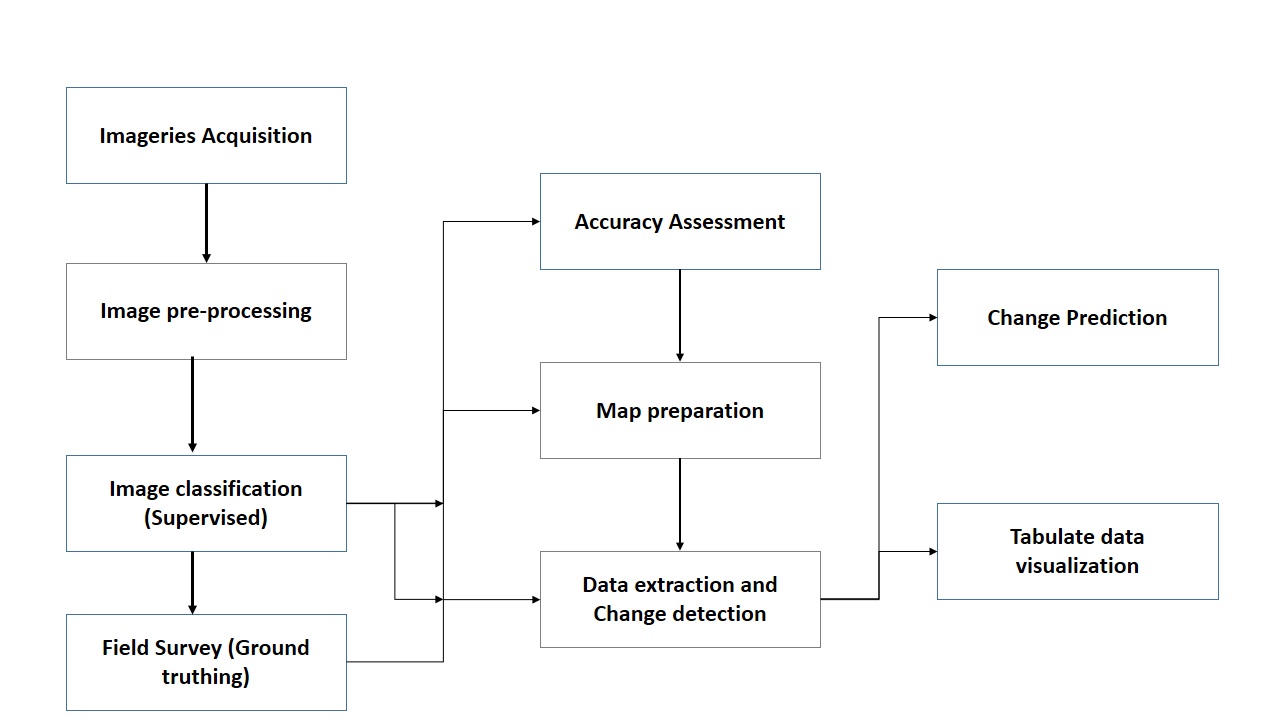
Classification method
Fig. Classification methodology flowchart
Classified image
Fig. Supervised classified satellite image
9 cm Drone9 ClassesDeforestation
2020–2021

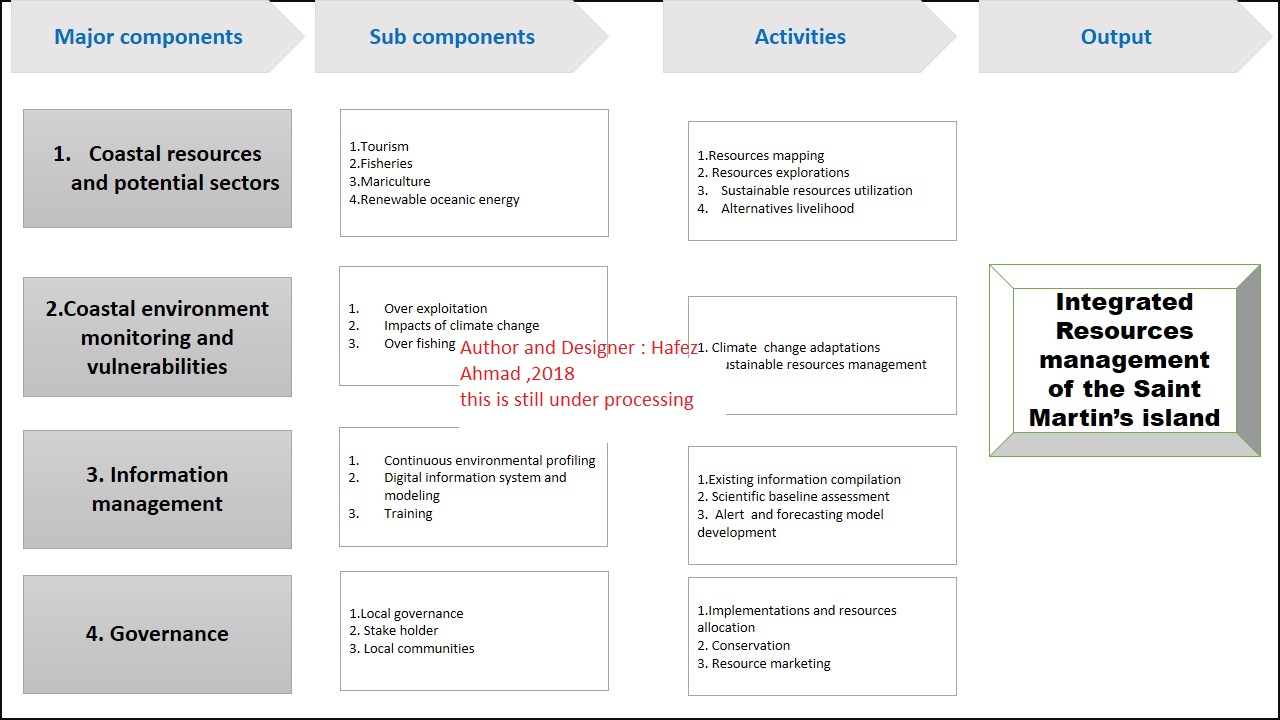
Integrated CZM — WCS Bangladesh

As Marine Data Officer at WCS Bangladesh, I developed GIS geodatabases, mapped MPA boundaries, modeled coastal vulnerability, and produced thematic maps of coral reef health, fishing pressure, and biodiversity across the Bay of Bengal — supporting Blue Economy spatial planning.

Integrated Zone Management Bangladesh
Fig. Integrated Island Zone Management, Bangladesh
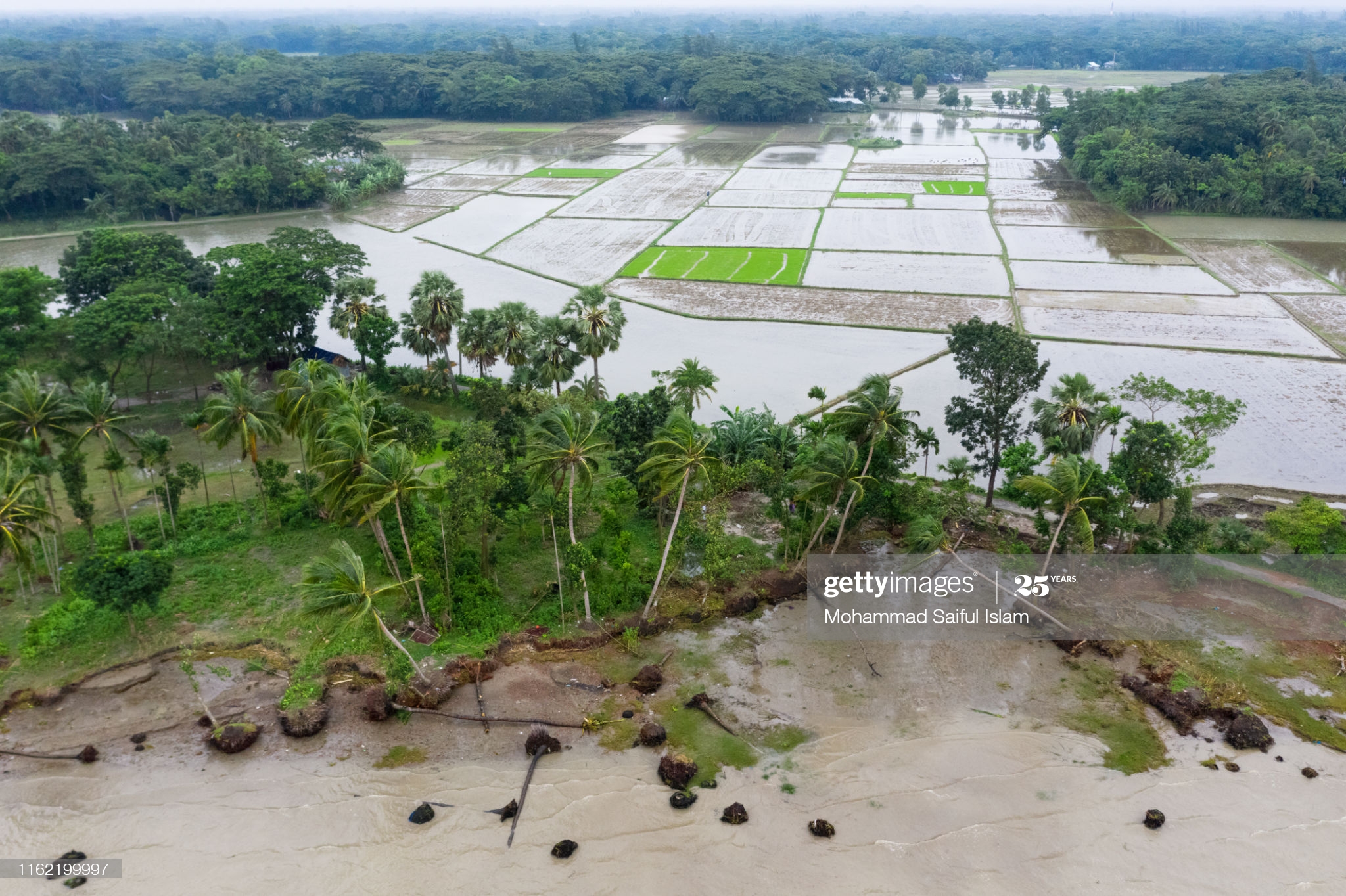
Drone coastal survey
Fig. Coastal area of Bangladesh (drone imagery)
MPA DesignBlue EconomyBay of Bengal
1984–2018

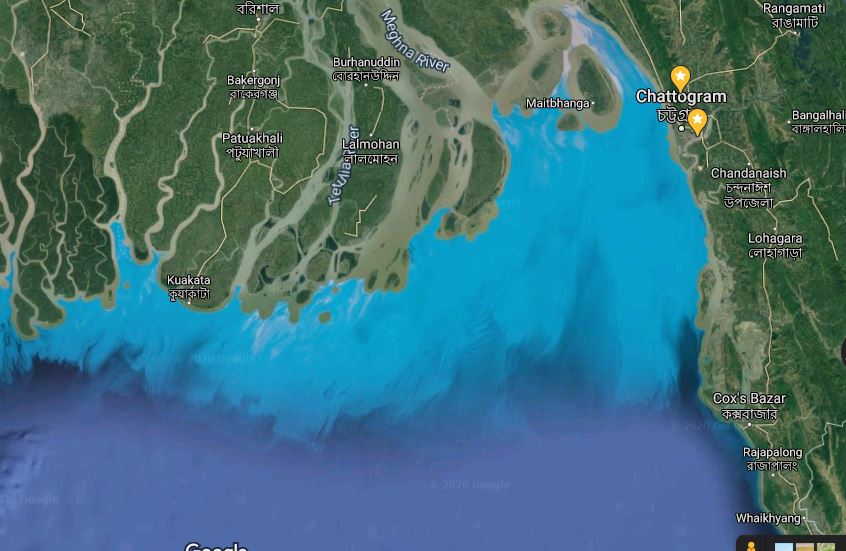
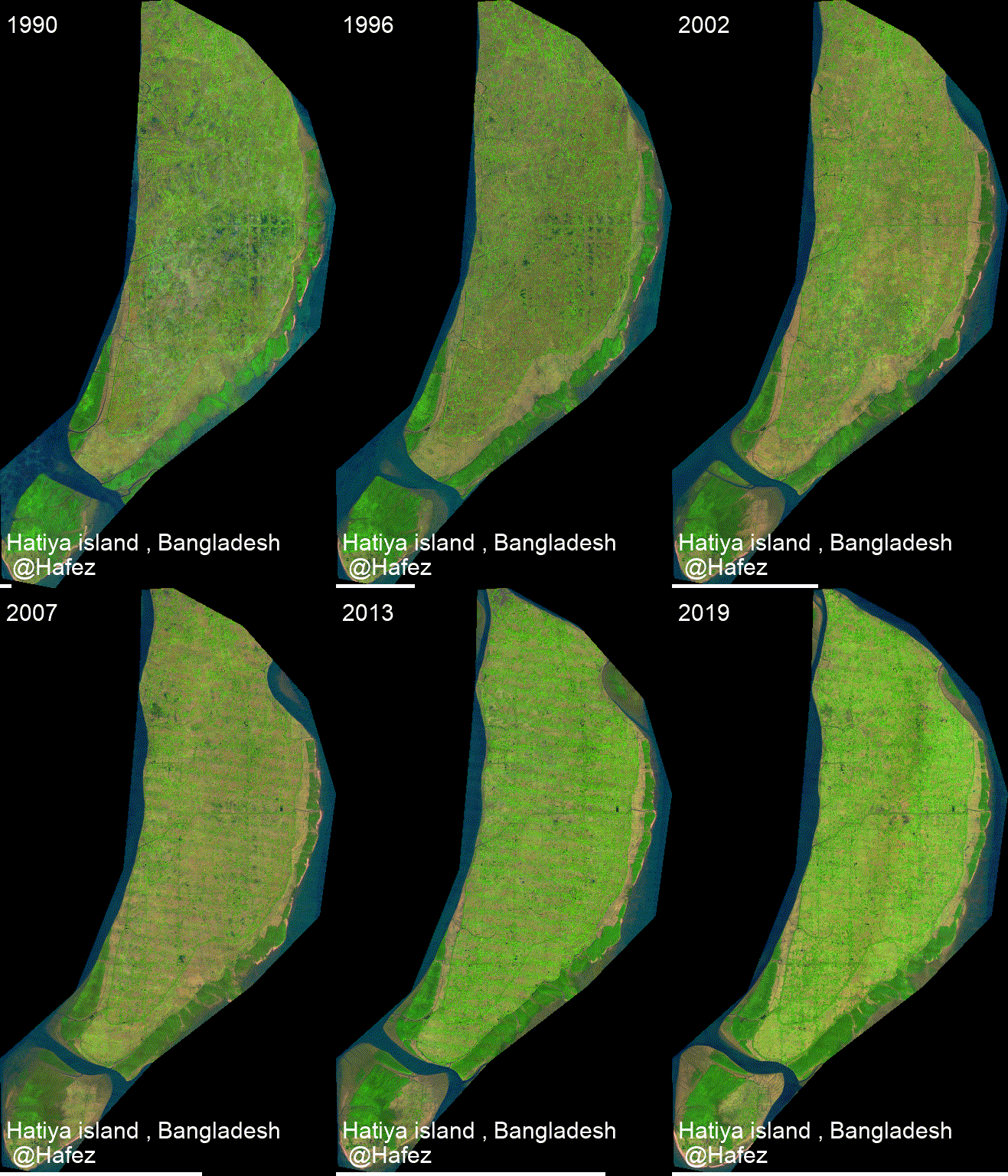
Cox's Bazar Coastal Change Time-Lapse

Long-term shoreline and LULC change analysis using GEE Landsat time-series spanning 34 years. Animated time-lapse shows dynamic coastal change: shoreline migration, sandspit accretion, estuarine channel shifts, and forest cover loss — used as an educational resource for coastal communities.

Time-lapse: Cox's Bazar coast 1984–2018 (Google Earth Engine / Landsat)

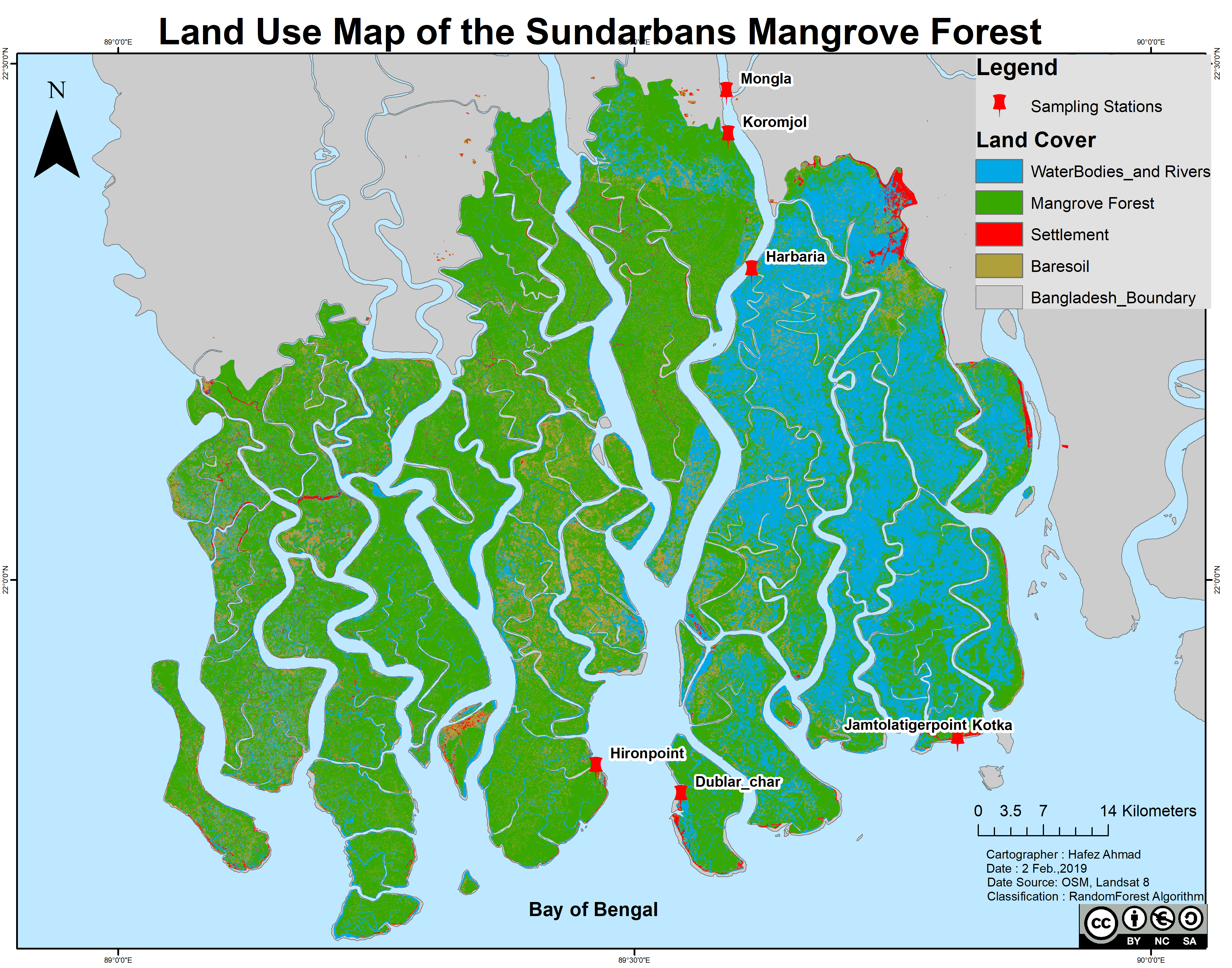
Sundarbans

Sundarbans Mangrove Forest Monitoring

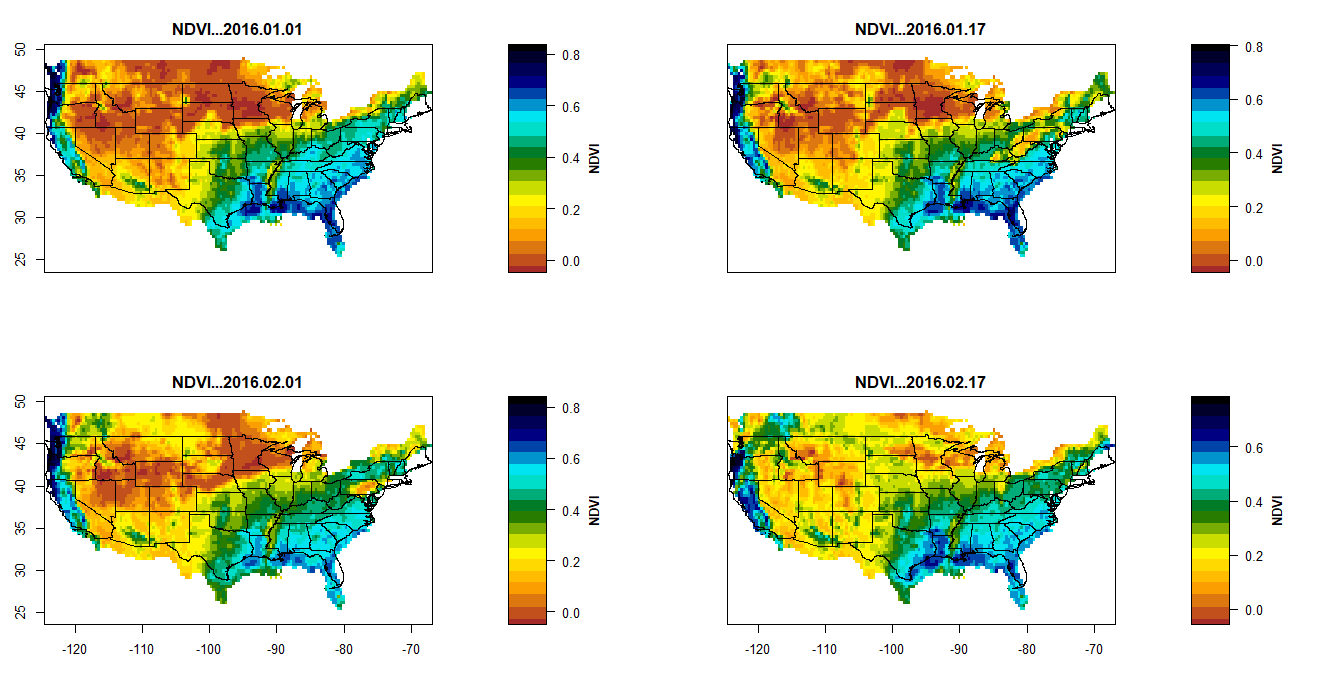
Decadal NDVI time-series and SAR backscatter analysis of the Sundarbans (~10,000 km²). Tracking cyclone impacts (Sidr 2007, Aila 2009, Amphan 2020) on canopy structure and subsequent recovery trajectories. Validated against Global Mangrove Watch (GMW) v3.0.

Sundarbans mangrove
Fig. Sundarbans mangrove extent
NDVI maps
Fig. NDVI vegetation maps
MangroveNDVICyclone ImpactRecovery

Coastal Zone Management & GIS Decision Support

Integrated Coastal Zone Management (ICZM) requires a robust spatial decision support system combining resource inventories, hazard assessments, and participatory planning. Key components I develop and deploy:

Resources Management

GIS-based inventories of fishery grounds, mangroves, coral reefs, aquaculture zones, and marine protected areas

Coastal Monitoring

Real-time satellite-based monitoring of shoreline dynamics, water quality, and vegetation cover change

Vulnerability & Risk

Coastal Vulnerability Index (CVI), SLR exposure using IPCC AR6 SSP scenarios, storm surge modeling

Good Governance

Stakeholder dashboards (GEE Apps, Streamlit), MPA boundary delineation, Blue Economy spatial planning

Hazard Mitigation

Cyclone track & storm surge mapping, embankment breach analysis, early warning GIS integration

Marine Spatial Planning

Habitat suitability modeling (MaxEnt, BRT), fishing ground mapping, MPA no-take zone design, Bay of Bengal

Selected GIS & RS Publications

My Work

Selected Papers by Hafez Ahmad

  • Ahmad, H. et al. (Pending). Phytoplankton functional type classification using FlowCytobot imagery and CNNs. Estuarine, Coastal and Shelf Science. [All publications →]
  • Ahmad, H. et al. (Pending). Google Earth Engine for long-term coastal water quality monitoring in the Mississippi Sound. Remote Sensing of Environment.
  • Ahmad, H. et al. (Pending). LULC change detection in Cox's Bazar, Bangladesh using Sentinel-2 and UAV imagery. IGARSS 2023.
  • Ahmad, H. et al. (Pending). Coastal vulnerability assessment of southern Bangladesh using multi-criteria GIS. Regional Studies in Marine Science.
  • Ahmad, H. et al. (Pending). Shoreline change analysis along Cox's Bazar using DSAS and multi-temporal Landsat. Ocean & Coastal Management.
Key
References

Foundational GIS & RS Papers

  • Gorelick, N. et al. (2017). Google Earth Engine: Planetary-scale geospatial analysis. Remote Sensing of Environment, 202, 18–27.
  • Wulder, M. A. et al. (2019). Current status of Landsat program, science, and applications. RSE, 225, 127–147.
  • Drusch, M. et al. (2012). Sentinel-2: ESA's optical high-resolution mission for GMES. RSE, 120, 25–36.
  • Zhu, Z. & Woodcock, C. E. (2014). CCDC of land cover using all available Landsat data. RSE, 144, 152–171.
  • Pekel, J.-F. et al. (2016). High-resolution mapping of global surface water. Nature, 540, 418–422.
  • Kuenzer, C. et al. (2011). Remote sensing of mangrove ecosystems: A review. Remote Sensing, 3(5), 878–928.

Related Tutorials & Code Notebooks

Hands-on GEE and Python geospatial notebooks from my research: